

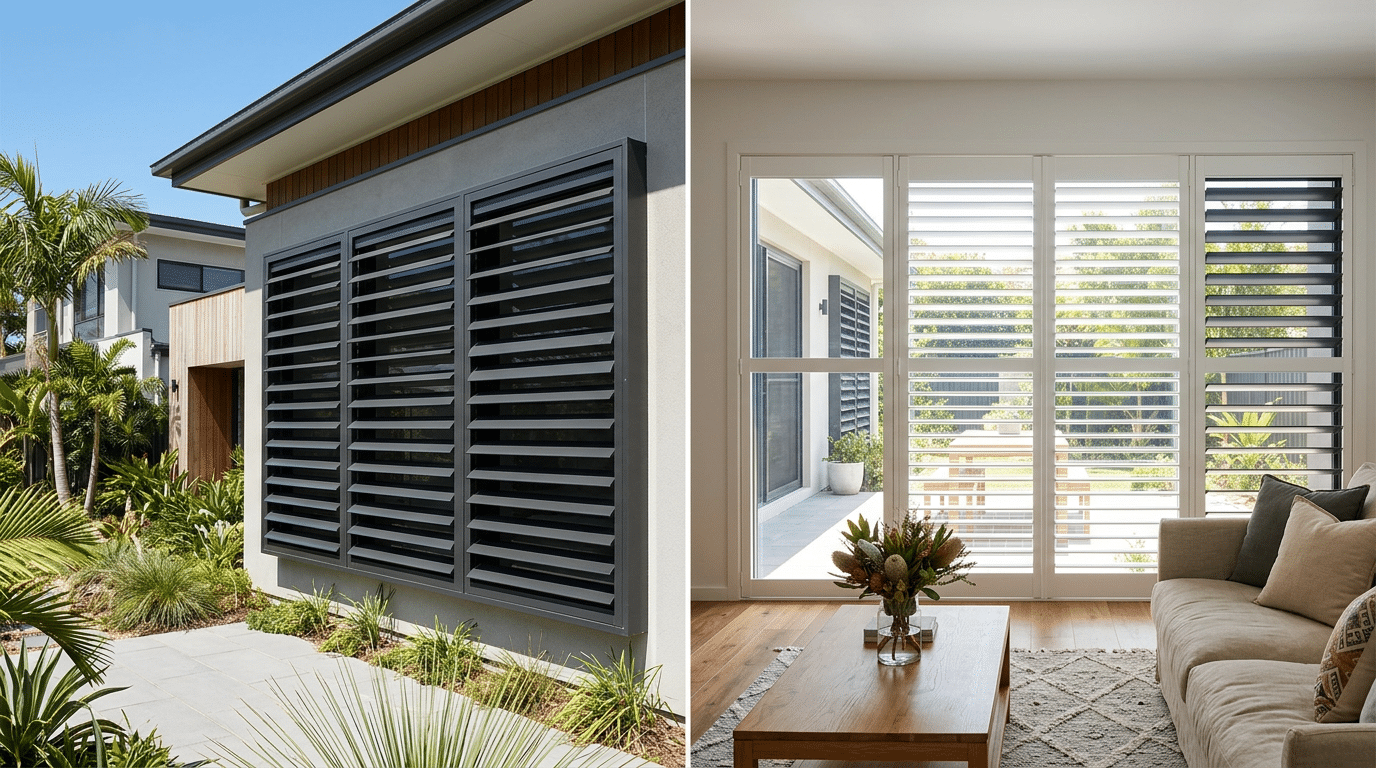
30 Jun Louvres vs Shutters: What’s the Difference and When to Choose Each
Louvres and shutters both use horizontal angled slats — but they serve very different purposes. Knowing the difference helps you choose the right option for every space in your Brisbane home.
If you have been confused by the terms “louvres” and “shutters,” you are not alone. Both products feature horizontal slats that manage light and airflow. Both are popular choices across Queensland homes. However, they are genuinely different products with distinct strengths. Choosing the wrong one for a given space means missing out on real performance. This guide gives you a clear, practical framework for deciding between louvres and shutters — without the technical jargon.
Understanding the Terminology: Where the Confusion Starts
The confusion begins because the two terms overlap in one important way. A “louvre” is technically the individual angled slat or blade itself. It is the moving component that tilts to control light and airflow. Plantation shutters are made up of louvres set within a solid panel frame. So in one sense, all shutters with adjustable slats contain louvres.
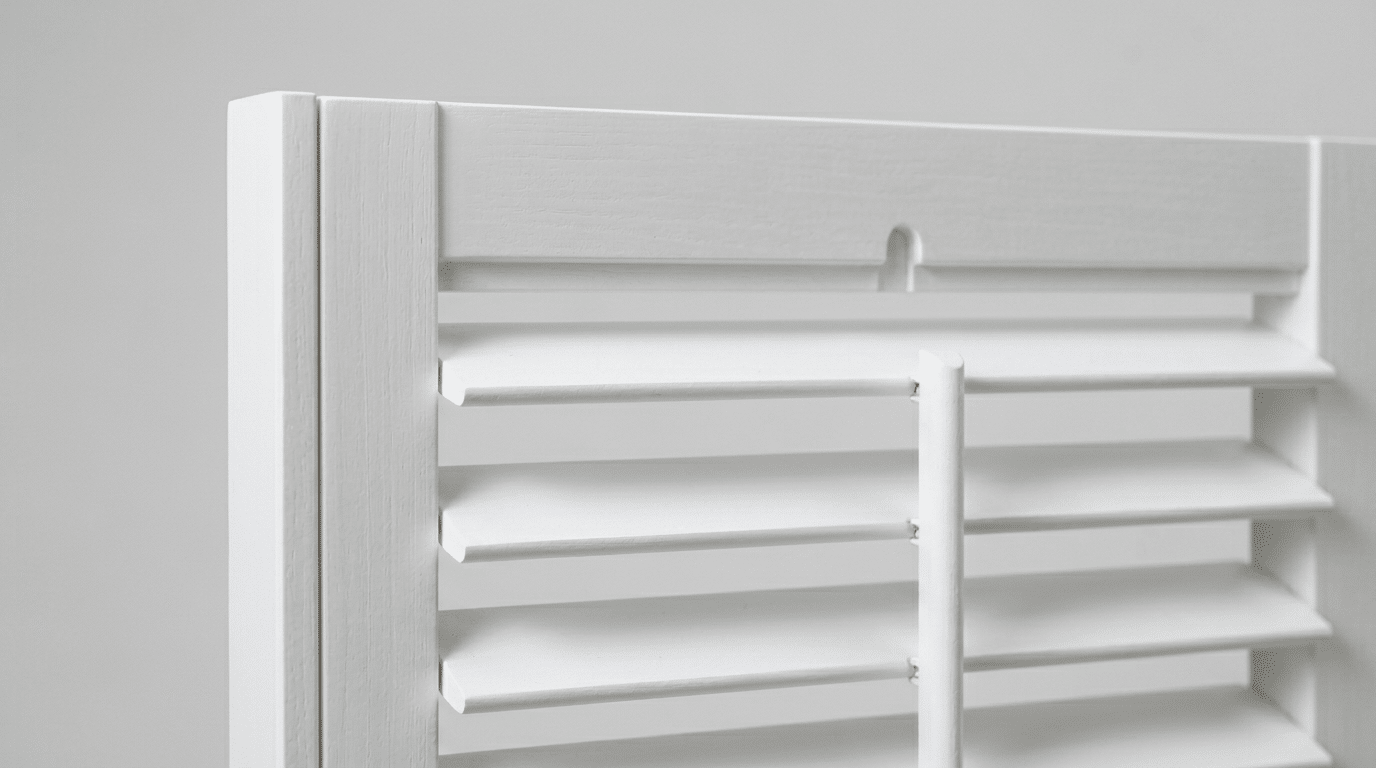
In common use, however, “louvres” typically refers to a broader product category. This includes external architectural louvre systems, louvre windows, and open-frame louvre panels used on outdoor spaces and facades. “Shutters,” on the other hand, refers to panel-based, framed window coverings designed for interior use or full weather enclosure. Understanding this distinction is the starting point for making a confident decision.
Key Structural Differences
Shutters and louvres differ in their construction in several important ways. A plantation shutter consists of panels with a solid outer frame. This includes stiles and rails, with adjustable louvres running across each panel. The frame fits precisely within or over your window opening. This gives shutters their solid, built-in appearance and their strong insulating and privacy properties.
External louvre systems, by contrast, are typically open-frame constructions. The louvre blades span between two side rails without a solid surrounding panel. This open structure allows maximum airflow. However, it provides less insulation, less sound reduction, and less weather sealing than a fully framed shutter. Blade width also differs. Plantation shutter louvres are typically wider — 63mm to 114mm. Architectural louvres are often narrower, with blades of 50mm to 80mm, creating a finer visual rhythm across the opening.
Indoor vs Outdoor: Where Each Product Performs Best
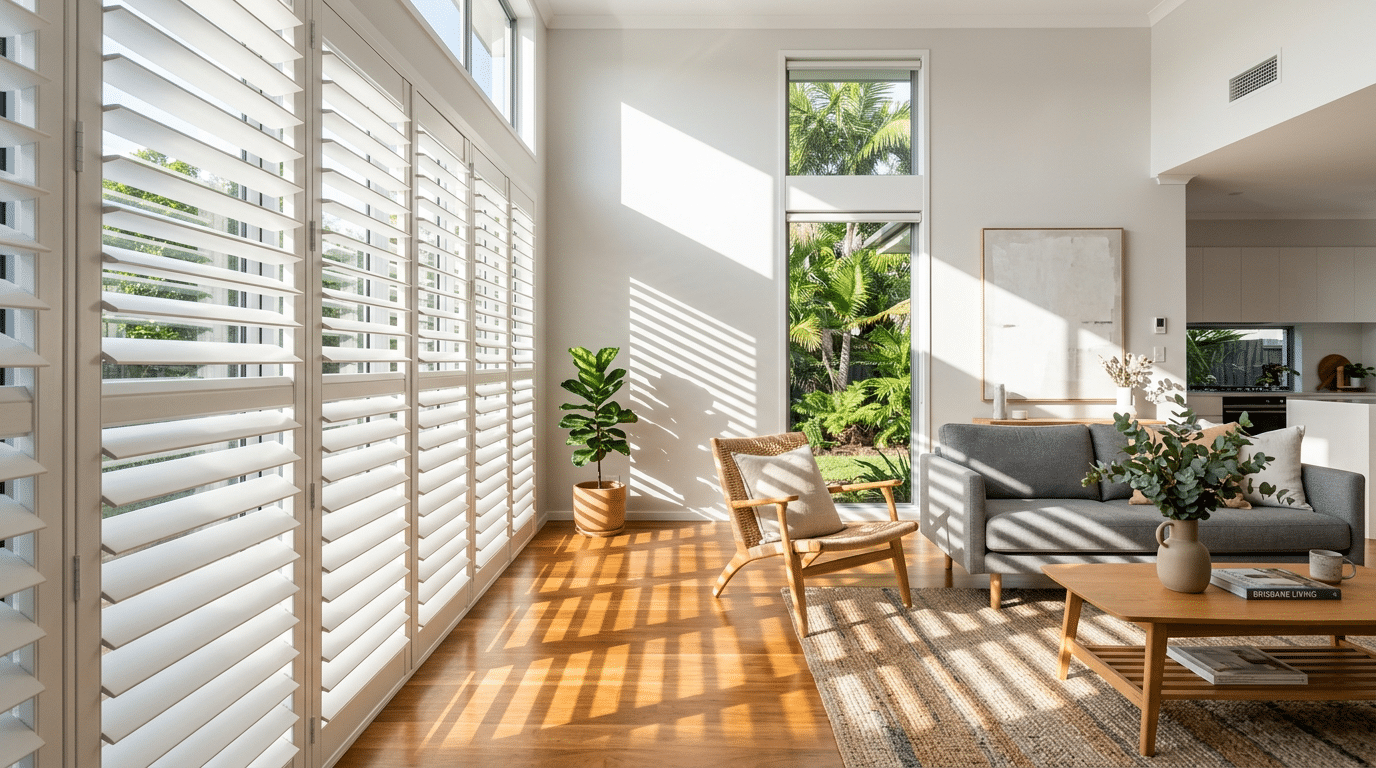
Plantation shutters are primarily an interior product. They sit within the window reveal or against the wall surface of internal rooms. Their close-fitting panels and quality finishes make them ideal for living rooms, bedrooms, dining rooms, and studies. They manage light and heat at the glass line and contribute meaningfully to your home’s insulation.
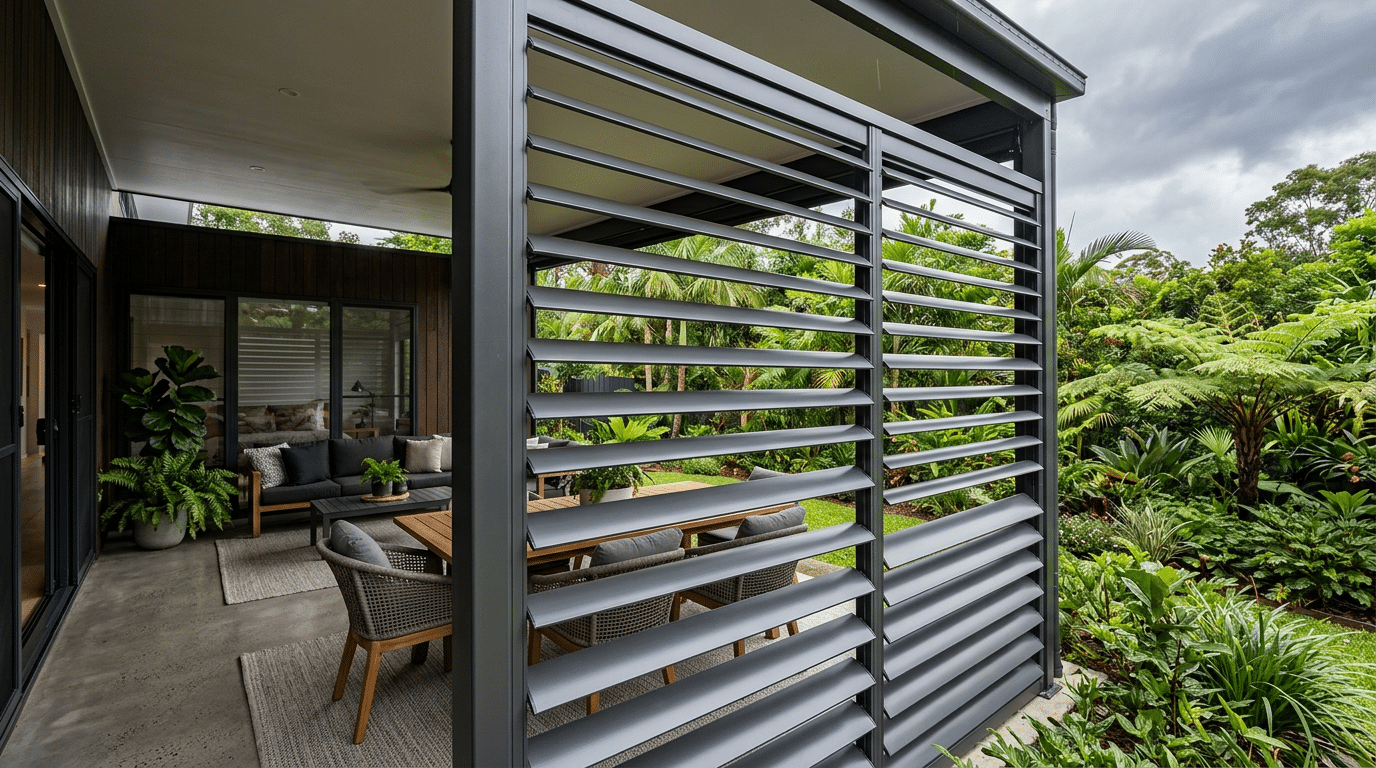
External louvres — including ShutterUp’s external aluminium shutters — are designed for outdoor use. They mount on the exterior of your home, on patios, alfresco areas, balconies, and facades. Aluminium construction is essential here. It resists UV degradation, moisture, and coastal salt air. External aluminium louvre shutters are the practical and durable choice for Brisbane homeowners looking to enclose a patio or manage alfresco airflow.
Light, Privacy, and Airflow: A Practical Comparison
The real difference between louvres and shutters becomes clear when you compare their day-to-day performance. Plantation shutters with wide, closely-framed louvres offer the most precise light control. The panel fits snugly in the window, minimising light bleed around the edges. You can tilt the louvres through a full range of angles. The result is fine-tuned, room-by-room control that no open-frame louvre can match.
Open-frame louvre systems allow more airflow by design. The absence of a solid panel means air moves through freely even when the blades are angled for shade. This is a clear advantage in a Queensland alfresco space or on a balcony. However, that openness means louvre systems offer less privacy and less sound insulation than a framed shutter. Each product has a clear and distinct role. The best results come from choosing the right one for the right space.
When to Choose Plantation Shutters
Plantation shutters are the right choice when you need a premium interior finish with precise, everyday light and privacy control. Choose them for living rooms, master bedrooms, and formal spaces. These are areas where quality and detail are most appreciated. Our timber plantation shutters deliver a warm, natural look that suits Brisbane’s classic architecture. Hybrid and polymer options suit rooms where moisture resistance is more important.
Shutters are also the stronger choice when thermal insulation and sound reduction matter. The solid framing and close-fitting panels create a meaningful barrier between your living space and the outside. For Brisbane homes on busy streets or facing the intense afternoon western sun, this insulating effect is genuinely valuable every day.
When to Choose Louvres
Louvres are the right choice for outdoor applications and where ventilation takes priority over insulation. For an alfresco area, balcony, or patio, external aluminium louvres deliver what shutters cannot. They provide weather protection and privacy without blocking the breeze. They are built for the outdoors and handle Queensland’s UV, humidity, and coastal salt air without deteriorating.
Louvres are also well suited to architectural applications — facade screening, carport privacy panels, or side fence screening. In these situations, the open-frame design is a strength, not a limitation. The blades can be fixed at a set angle or made adjustable, depending on the control you need. Explore the full range of plantation shutters and external shutter options on the ShutterUp website to find what suits your project.
Can You Use Both in the Same Home?
Absolutely — and many Brisbane homeowners do. The most effective approach uses interior plantation shutters on internal windows and external aluminium louvre shutters on outdoor-facing openings. Interior shutters manage light, privacy, and insulation from inside. External louvres handle weather, sun, and airflow from outside. Together, they deliver a complete window covering solution for the whole home.
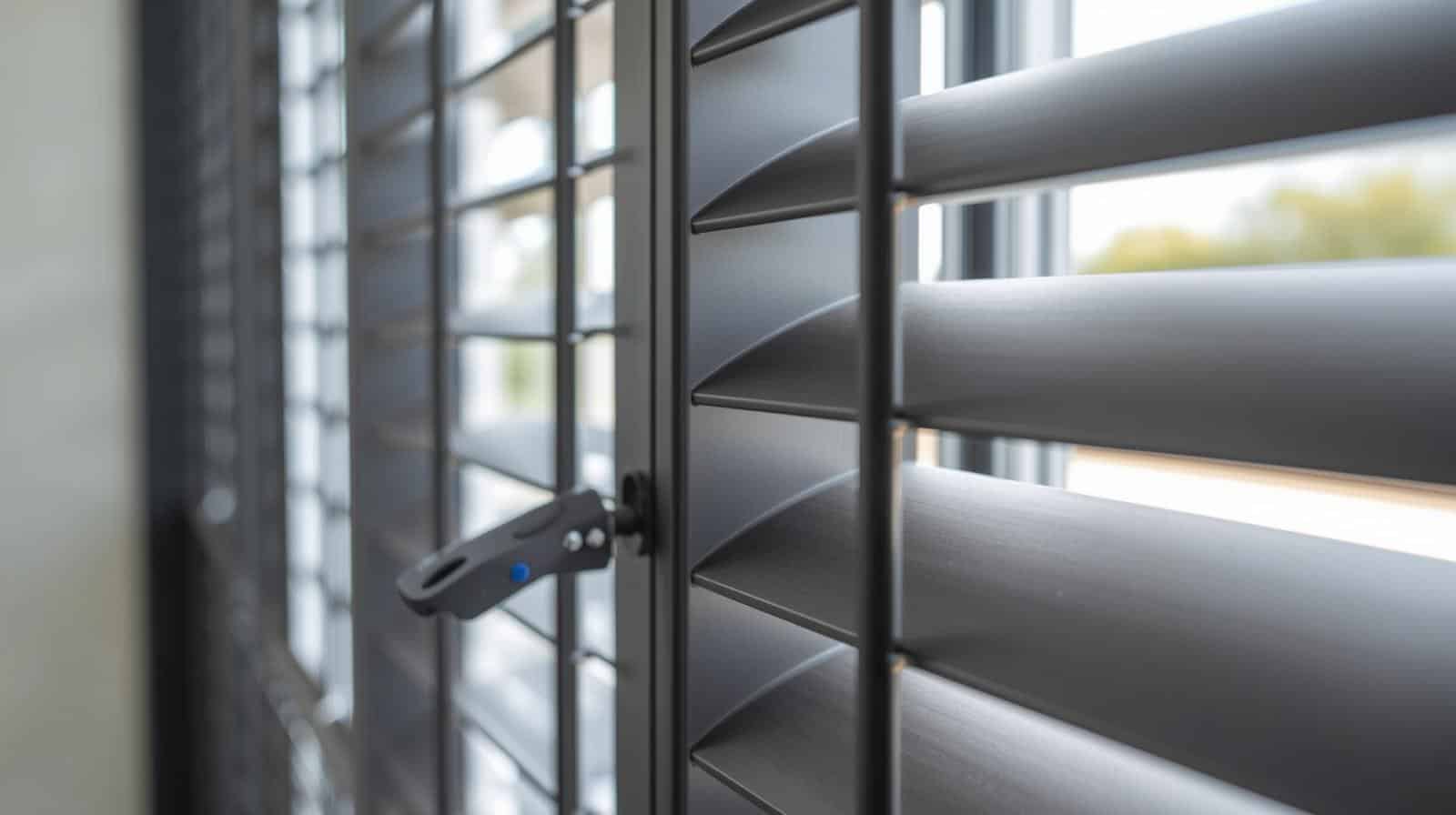
This combination works particularly well for homes with covered alfresco areas that connect to living spaces. The indoor shutters maintain the quality and finish of your interior. The external louvres give the outdoor space year-round usability. Our team can advise on both during a single free in-home consultation. Visit our full range of blinds and shutters to explore all available options.
Get the Right Advice for Your Brisbane Home
Louvres and shutters each have a clear role. The key is knowing which one belongs where. ShutterUp’s family team has been helping Brisbane and Ipswich homeowners make exactly this decision for over 20 years. We know the products, the climate, and the challenges of Queensland homes inside out. We stock and install both — so our advice is always honest and based on what actually works best for your space.
Call us on 1300 883 637 or book your free in-home measure and quote today. We service Brisbane, Ipswich, and surrounding suburbs. We will make sure you choose the right product for every space in your home.
Frequently Asked Questions
What is the main difference between louvres and shutters?
Louvres are the individual angled slats used in window coverings and ventilation systems. Shutters are a complete panel-based product that includes louvres within a solid, framed construction. In practical terms, plantation shutters are interior window coverings, while louvre systems are typically used for external applications such as patios, facades, and balconies.
Can louvres be used indoors?
Yes. The louvres in plantation shutters are designed specifically for indoor use. Standalone open-frame louvre panels are primarily outdoor products. If you want a louvred look indoors, plantation shutters with adjustable louvres are the best-suited option.
Which gives better privacy — louvres or plantation shutters?
Plantation shutters offer superior privacy. Their wide adjustable louvres sit within a close-fitting solid frame, minimising gaps and sightlines. Open-frame louvre systems allow more light gaps between blades, reducing privacy when viewed from outside. For bedrooms and street-facing rooms, plantation shutters are the stronger choice.
Are external louvres suitable for Brisbane’s climate?
Yes — provided they are made from powder-coated aluminium. Aluminium louvres resist UV degradation, humidity, coastal salt air, and temperature swings without warping or corroding. They are the recommended material for all external shutter and louvre installations across Brisbane and Ipswich.
Can I have both plantation shutters and external louvres in the same home?
Yes, and many Brisbane homeowners do. Interior plantation shutters manage light and privacy from inside. External aluminium louvres handle weather and airflow on outdoor spaces. The two products work together to provide a complete solution for the whole home — both indoors and out.