

15 Sep Outdoor Louvered Shutters: Blade Angles, Fixings and Compliance
Outdoor louvered shutters use adjustable or fixed aluminium blades to control light, airflow and rain. On a Brisbane deck or balcony, the right result depends on blade angle and correct fixings. It also depends on meeting both wind rating and balustrade compliance rules.
Outdoor louvered shutters are aluminium panel systems with blades that tilt to control sunlight, rain and airflow. You’ll find them across patios, decks and balconies, running horizontally or vertically depending on the opening. Blade angle sets how much weather protection you get at any moment. Fixing method and wind rating determine whether the installation holds up in Brisbane’s storm season. They also determine whether it meets balustrade compliance rules.
How Blade Angle Affects Airflow, Light and Rain Protection
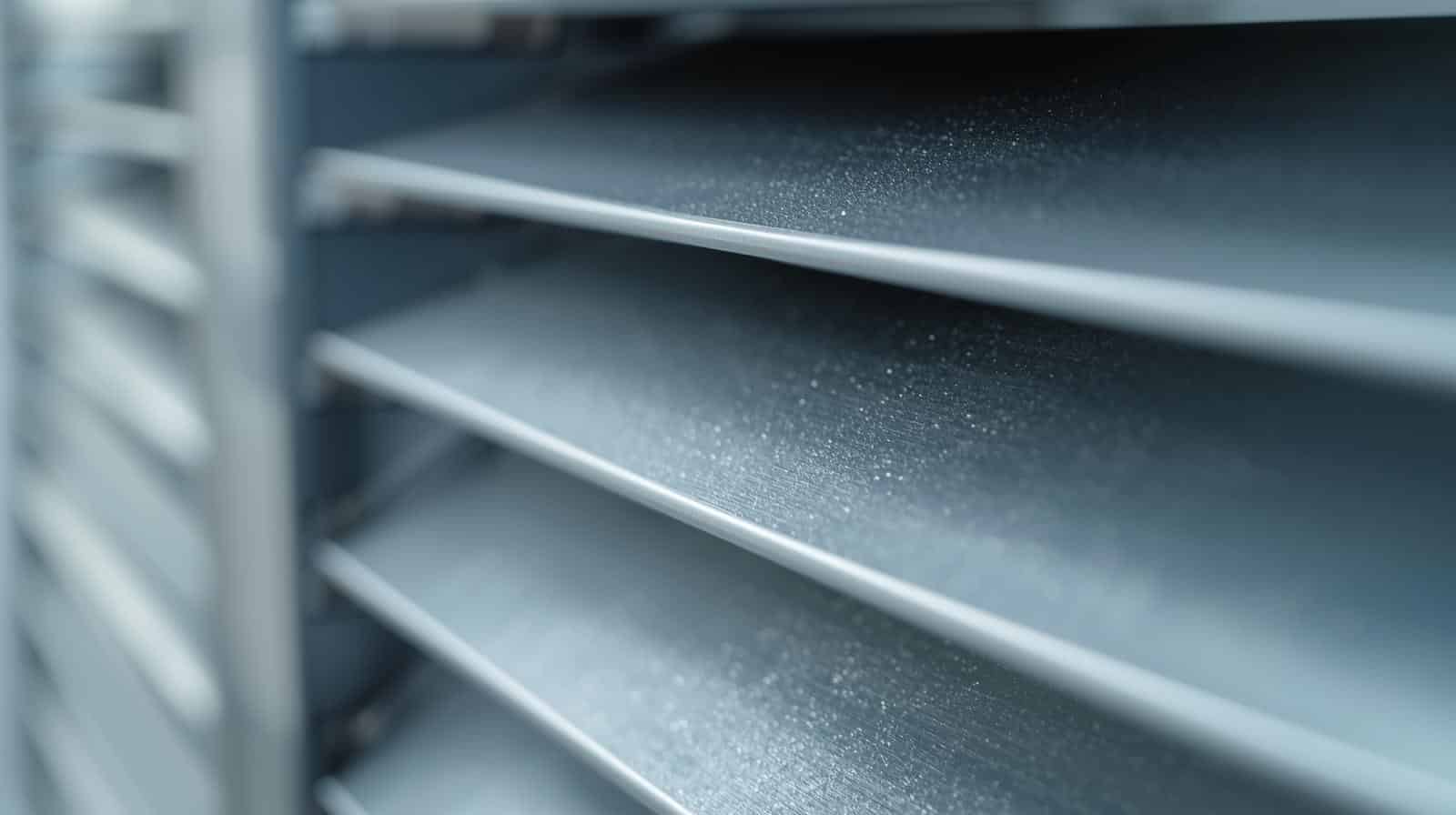
Blade angle is the single biggest factor in how a louvre panel performs day to day. A shallow angle, close to horizontal, maximises airflow and keeps sightlines open, which suits everyday shading on a covered patio. As the angle steepens towards vertical, the blades shed rain more effectively but cut airflow and light more sharply.
Most Brisbane installations use an adjustable range of roughly 0 to 90 degrees. This lets you tilt blades flat for a summer breeze in the morning. You can then steep them right up as a storm rolls in. West-facing balconies cop harsh afternoon sun. For these, we often recommend a slightly steeper resting angle by default. Homeowners can then flatten the blades once the sun has dropped. Fixed-blade panels skip this flexibility entirely. The manufacturer sets the angle once, which suits budget-conscious projects where shading needs don’t change through the day.
Fixed, Adjustable and Motorised Blade Systems
Choosing between fixed, manually adjustable, and motorised systems comes down to how often you’ll actually change the setting. Fixed blades cost less and need no maintenance. However, you accept one compromise between light and airflow all year.
Manually adjustable systems use a gear-operated rod or handle. This works well on smaller openings, but it becomes physically harder to turn on wider bi-fold or sliding panels. For larger spans — think a full-width alfresco opening — motorisation genuinely earns its keep. Most homeowners simply stop adjusting a stiff, heavy panel by hand after the first few months. Our external aluminium shutters range covers all three operating types. We’ll walk you through which suits your opening size during a measure and quote.
How to Fix Outdoor Louvered Shutters to Decks, Balconies and Patios
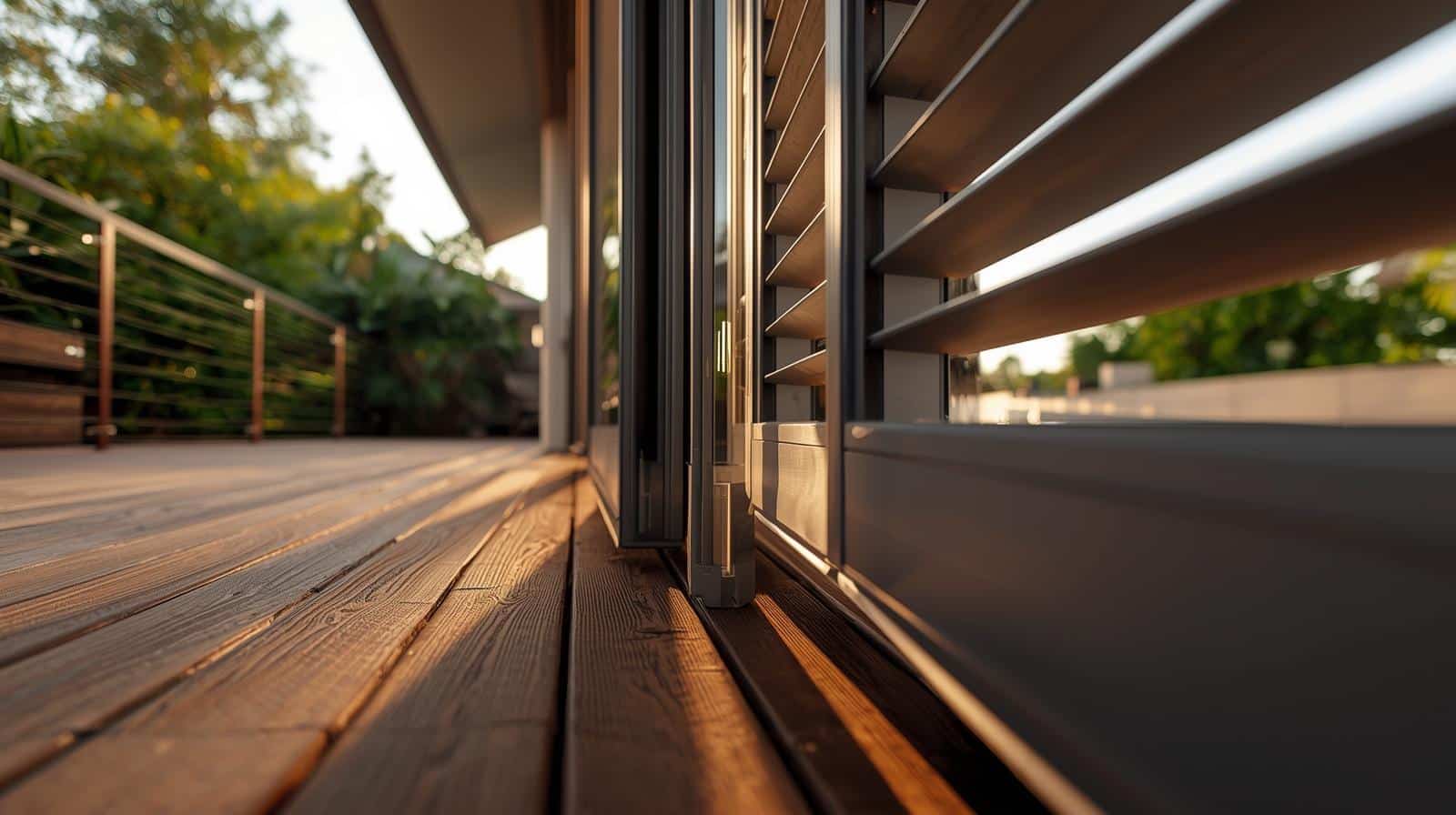
The fixing method matters as much as the shutter itself. A well-built panel fixed into the wrong substrate will fail long before the aluminium does. Installers typically fix outdoor shutters with stainless-steel screws into a solid frame, post, or masonry substrate. They never fix them into decorative cladding or lightweight timber trim.
What We Check Before Fixing to a Balcony
On balcony jobs specifically, our installers tap-test the substrate before drilling. This confirms it’s structural framing or reinforced blocking, not a cosmetic batten. We then set the screw pattern to the panel manufacturer’s spacing. Skipping holes to save time is a common shortcut among less experienced installers. It’s also the single biggest cause of blade rattle or panel movement in a storm. For adjustable panels, we also confirm the wind-lock or blade-lock engages fully in the closed position. A lock that only partially catches will still look closed. However, it won’t hold under gust loading.
Wind Rating and AS/NZS 1170.2 Explained
A wind rating tells you how much pressure a specific tested panel configuration can withstand. It does not automatically mean any installation of that panel is compliant. Manufacturers commonly wind-load test aluminium outdoor shutters to AS/NZS 1170.2, the Australian and New Zealand standard for wind actions. They express results as a pressure rating in pascals or an equivalent wind-region classification.
Consequently, the tested rating only applies to the exact panel size, fixing pattern, and substrate used in the test. Take a panel rated for a 1170.2 wind region. If it’s fixed into a weaker substrate than the test specified, it doesn’t carry that rating in practice. This is why we always confirm opening size and substrate type before quoting a wind performance figure — not after installation.
Balustrade Compliance on Balcony Installations
 Fixing a louvered shutter along a balcony’s balustrade line adds a second compliance layer beyond wind rating. The balustrade itself must still meet its required height and load requirements under the National Construction Code. That still applies once you fit the shutter. This matters because a shutter fixed incorrectly across a balustrade can inadvertently compromise the barrier it’s attached to.
In practice, this means we check the balustrade’s existing compliance before fitting. For some balcony configurations, we also recommend a glass-bottom panel option. This keeps the safety barrier visibly intact and compliant beneath the shutter frame. As of 2026, this is a common question from owners of newer Brisbane apartments and townhouses with glass balustrades. Getting this sequence wrong can mean removing and refitting the whole panel. If you’re still comparing louvres against fixed external shutters, raise balustrade compliance with your installer early. It’s worth deciding on this before you settle on a final configuration.
Ready to Get a Compliance-Ready Fixing Plan?
Blade angle, fixing method, and compliance all depend on your specific opening, substrate, and balustrade setup. That’s exactly what a free in-home measure and quote is for. Our team has fitted outdoor louvered shutters across Brisbane balconies, decks and patios for over 20 years. We’ll check your substrate, wind exposure, and balustrade requirements on site before recommending a configuration. For background reading, see our guide to blade sizes and tilt mechanisms — it’s a good next stop. Otherwise, book your free measure and quote or call 1300 883 637 to get started.
FREQUENTLY ASKED QUESTIONS
What blade angle is best for rain protection but still lets air through?
A steep angle, close to vertical, sheds rain most effectively while still allowing some airflow through the gaps. For everyday shading with better breeze, a shallower angle around 30–45 degrees is more common on covered Brisbane patios.
Are outdoor louvered shutters cyclone rated?
Some are, but only when the specific panel, fixing pattern and substrate match a tested configuration under AS/NZS 1170.2. A general “cyclone-rated” label doesn’t guarantee your exact installation carries that rating — always confirm the tested configuration with your installer.
Do I need council approval to install shutters on a Brisbane balcony?
It depends on your balcony’s existing balustrade compliance and your building type. Apartments and townhouses with body corporate rules often require approval; standalone houses usually don’t for a straightforward retrofit, but check locally before installing.
What’s the difference between fixed and adjustable blade shutters?
Fixed blades are set at one angle permanently and cost less, while adjustable blades tilt through a range so you can change light and airflow throughout the day. Motorised versions add convenience on wider panels that are harder to adjust by hand.
How are outdoor shutters fixed to a deck or balcony?
They’re fixed with stainless-steel screws into solid structural framing, posts, or masonry — never into decorative cladding. Correct screw spacing and substrate strength matter more to long-term performance than the panel itself.