

30 Jul Shutters vs Blinds in Brisbane: Which Works Best Room by Room?
In Brisbane, shutters and blinds each have a genuine home — in different rooms. Use plantation shutters where heat control and architectural finish matter most; blinds where flexibility, fabric properties, or large span coverage are the priority. For outdoor areas, neither indoor product applies — outdoor aluminium shutters are the right answer.
In Brisbane, choosing between shutters and blinds isn’t a one-size-fits-all decision. The right answer changes room by room, and even wall by wall. The primary driver isn’t style or budget — it’s the sun. Brisbane’s subtropical climate means a west-facing living room faces an entirely different heat challenge to a south-facing bathroom. A window covering that performs brilliantly in one space can be the wrong call in another. The ShutterUp team has helped Brisbane and Ipswich homeowners through this decision for over 20 years. We see both products earn their place — in different rooms, for different reasons.
What’s the Real Difference Between Shutters and Blinds?
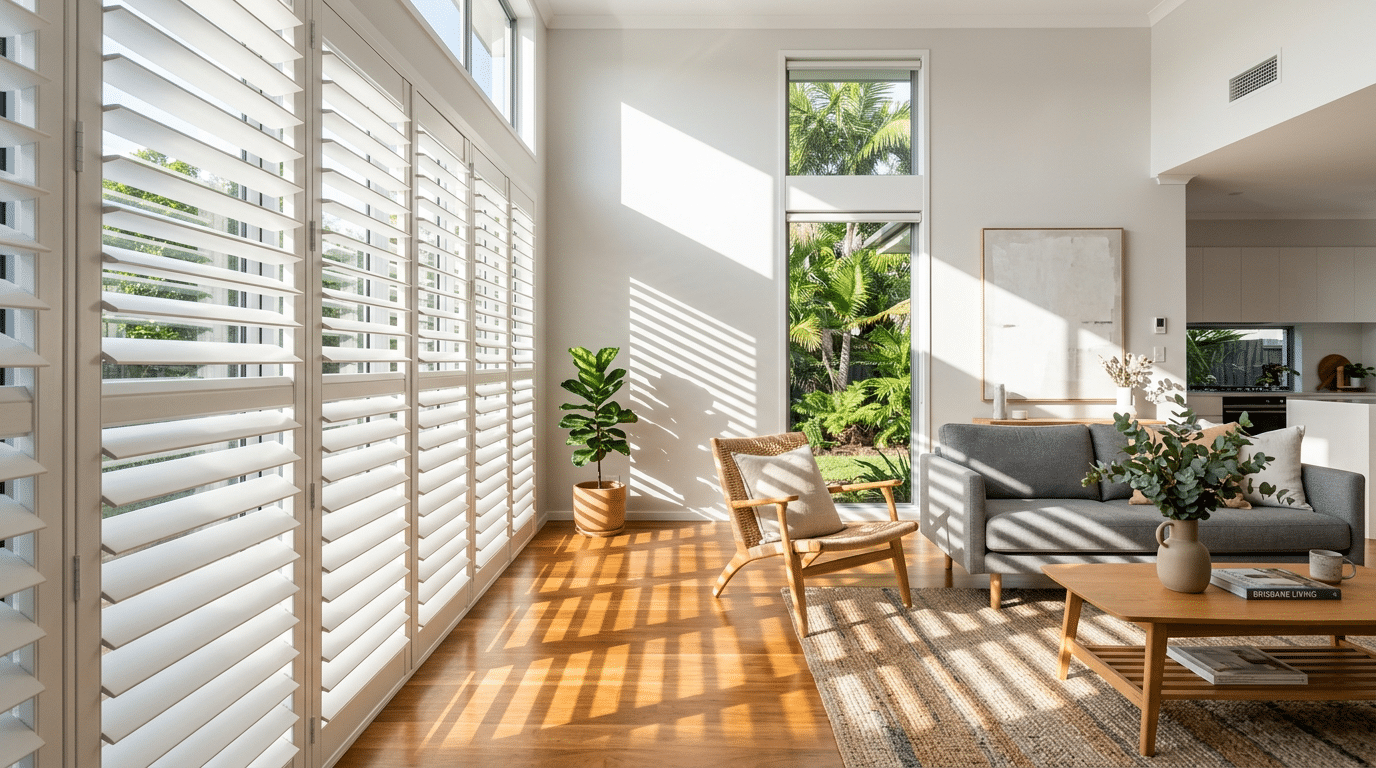
Plantation shutters and blinds both manage light and privacy. They do it through fundamentally different structures. Plantation shutters are rigid, framed panels fitted permanently into or around the window frame. Their adjustable louvres tilt to control light and airflow. Blinds are flexible coverings — fabric, timber slats, or aluminium — hung from a head rail. They raise, lower, or tilt to operate.
The practical differences matter in Brisbane. Shutters are a fixed architectural feature. They’re custom-built to the exact window, become part of the home, and add value as a permanent fixture. Blinds offer far more flexibility. They can be changed without affecting the window frame, suit very wide opening spans, and come in fabric types that have no shutter equivalent. Blockout, sheer, sunscreen, honeycomb thermal, and motorised roller formats all exist in blinds alone.
Neither product is objectively better. The right answer depends on what you need each specific window to do — and that depends heavily on which direction it faces.
Brisbane’s Climate Makes Room Orientation Everything
The most important factor in the shutters-vs-blinds decision for Brisbane homes is which direction your windows face. Southeast Queensland sits in Climate Zone 2 under the Australian Building Codes Board’s NatHERS classification. It’s a subtropical zone where reducing solar heat gain is the single most effective strategy for keeping homes comfortable. External and internal window shading are the primary tools for achieving this without over-relying on air conditioning.
West-facing windows are the central challenge. Brisbane’s afternoon sun hits west-facing glass at a low angle from around 2pm onwards in summer. It pours intense radiant heat into living areas, bedrooms, and studies. This is the “3pm furnace” effect that every Brisbane homeowner with west-facing rooms knows firsthand. At ShutterUp, west-facing windows are the most common starting point for this conversation. The answer there is almost always plantation shutters.
East-facing rooms receive morning sun. It’s gentler, shorter in duration, and rarely the main thermal problem. South-facing rooms receive very little direct sun year-round. North-facing rooms get consistent sun through the day in winter but can be managed with tilted louvres. These orientation differences change the right answer for every room in the house.
Room by Room: Which Option Wins in a Brisbane Home?
Living and Dining Rooms
For west-facing living and dining rooms, plantation shutters are the stronger choice. The louvres angle to block direct afternoon sun while still allowing diffused light and airflow. The rigid blade material also creates a more effective thermal barrier than most blind fabrics. Fabrics absorb heat before allowing some of it to radiate inward — shutters redirect it.
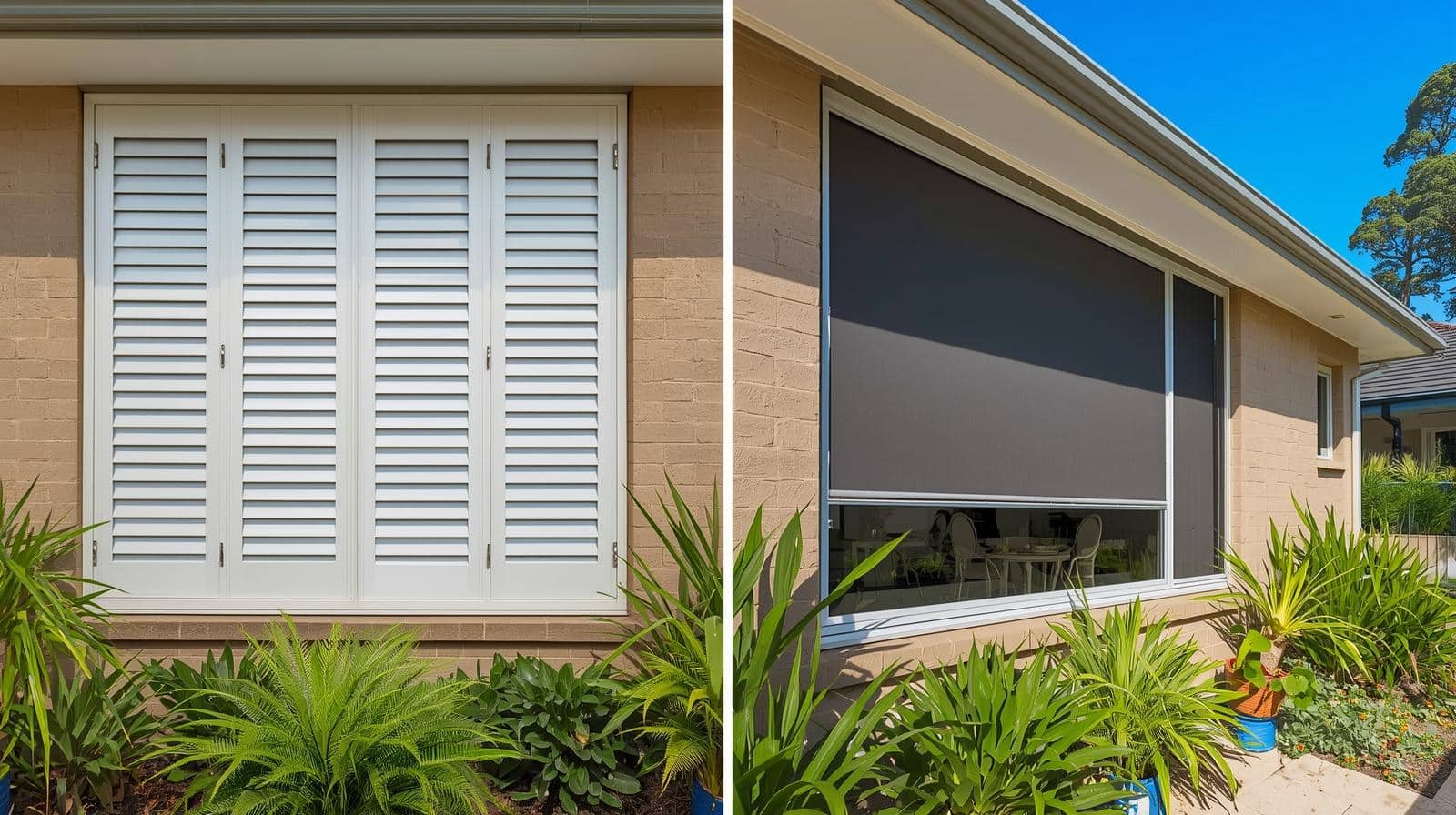
For east or south-facing living rooms, the heat argument is much less urgent. Roller blinds or Roman blinds in a sheer or sunscreen fabric offer a cleaner finish and better control over soft diffused morning light. They also handle large sliding door spans far more practically than a shutter panel would. See ShutterUp’s full plantation shutter range for louvre and framing configurations available for living areas.
Bedrooms
Brisbane bedrooms need both privacy and genuine light control for sleeping. Plantation shutters handle privacy well. Louvres angled upward direct light toward the ceiling while blocking sightlines from outside. Quality roller blockout blinds achieve the same light-blocking outcome at a lower cost. The trade-off is less fine-grained control when you want some morning light without full exposure.
For master bedrooms — particularly west-facing ones — shutters pay back quickly. Brisbane’s summers are long and hot, and the difference in room temperature by early afternoon is noticeable. For secondary bedrooms, quality blockout roller blinds perform reliably at a lower price point.
Bathrooms and laundries favour synthetic plantation shutters or aluminium Venetian blinds. Both handle humidity without warping, swelling, or mould. Standard timber blinds aren’t appropriate in wet areas. Synthetic polymer shutters are.
Home Offices
Glare on screens is the defining problem in Brisbane home offices, particularly in north-facing rooms where the sun is consistent through the day. Plantation shutters offer precise louvre control. You can direct light toward the ceiling rather than the screen, maintain airflow, and adjust throughout the day as sun angles shift.
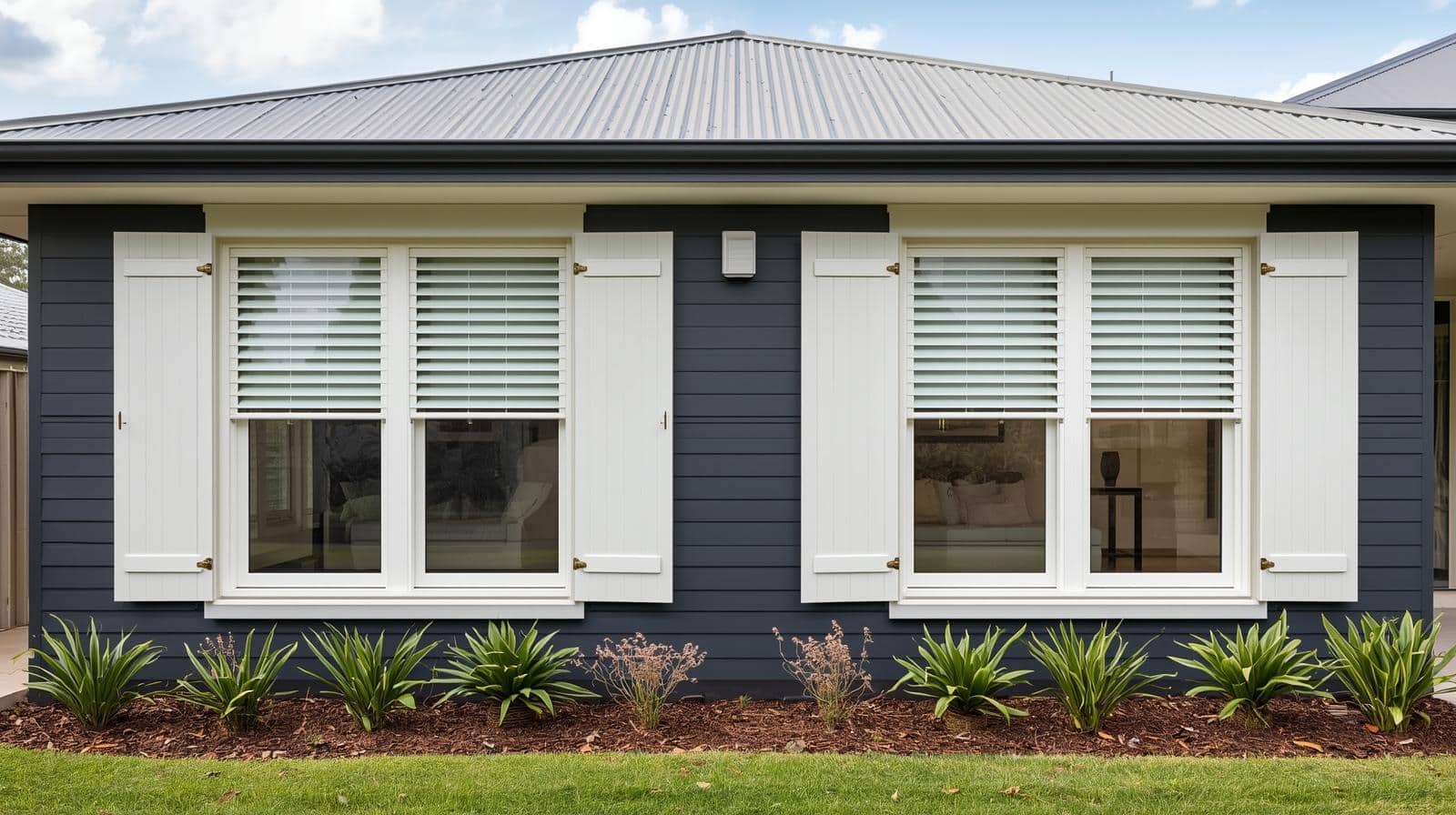
Honeycomb cellular blinds are an excellent alternative where thermal comfort is the priority. Their cell structure traps air and provides better insulation than any standard blind fabric. On north-facing windows in older homes with lower glazing performance, they can make a real difference.
Alfresco Areas and Patios
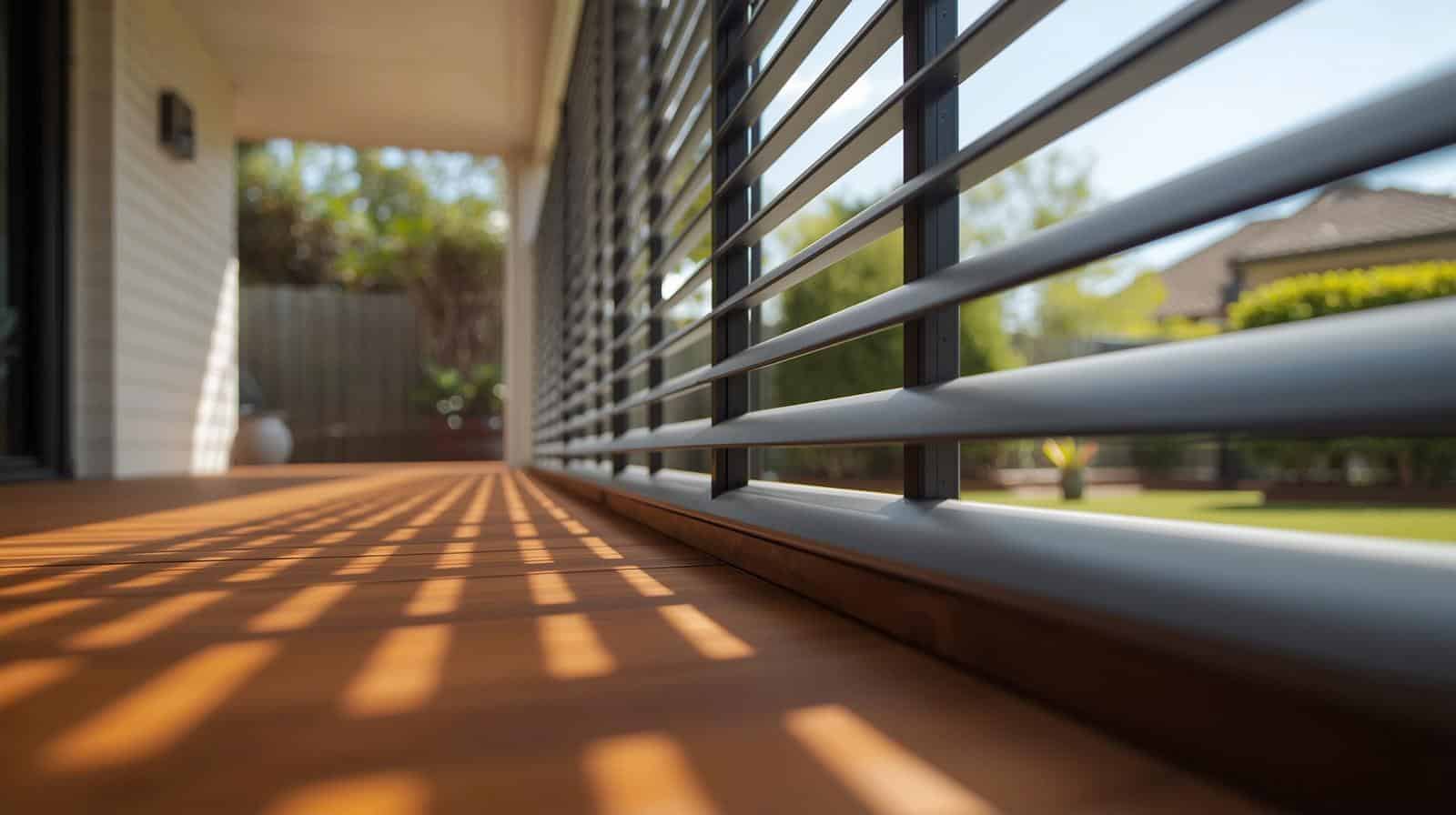
For outdoor entertaining areas, patios, balconies, and decks, neither indoor-grade plantation shutters nor standard fabric blinds are the right product. Outdoor aluminium shutters are purpose-engineered for these spaces. They handle weather, UV, structural wind load, and the physical demands of permanent outdoor installation.
Outdoor aluminium shutters extend the useable hours of your outdoor area. They intercept afternoon sun before it reaches your patio surface, provide privacy from neighbouring properties, and allow the space to close against wind and rain when needed. ShutterUp’s external aluminium shutters are custom-fitted for Brisbane and Ipswich homes and available across the full Dulux powder coat range.
When Does It Make Sense to Mix Both in the Same Home?
A mixed approach — plantation shutters in some rooms, quality blinds in others — is often the most practical outcome for a Brisbane home. ShutterUp is well positioned to advise on this because we carry both products.
The logic is simple. Invest in shutters where the return is highest — west-facing living rooms, the master bedroom, and main entry windows. Use quality blinds where flexibility or specific fabric properties are the stronger fit — secondary bedrooms, laundry, large sliding door spans, or a home office where full blockout is the goal.
Working with a supplier who carries both products means your recommendation is shaped by what suits each specific room. There’s no single-product bias. For outdoor spaces, explore how outdoor plantation blinds and shutters compare to understand where aluminium external shutters are the clear answer.
Which Lasts Longer in Brisbane’s Conditions?
Both products can last for decades when correctly specified. The durability comparison generally favours shutters for long-term installed performance. Quality timber or synthetic plantation shutters are fixed architectural features. They have no fabric to fade, no cord systems to wear out, and no roller mechanisms to lose tension.

Fabric blinds in Brisbane’s high-UV environment need replacement more frequently than shutters. That said, modern roller and Roman blind fabrics are far more UV-stable than they were a decade ago. Quality products perform well, particularly in south or east-facing rooms where UV exposure is lower.
For outdoor applications, extruded aluminium shutters outlast fabric blinds across every measure — sun exposure, rain, coastal conditions, and wind loading. For a detailed look at how ShutterUp’s shutter and blind options perform across different room types and climatic exposures, the ShutterUp resource covers the full picture.
Ready to Choose the Right Option for Your Brisbane Home?
The best way to land on the right answer is to walk through your home room by room with someone who knows Brisbane’s conditions and carries both products. At ShutterUp, there’s no incentive to push you toward one product over another — we’ll recommend what genuinely suits each space.
ShutterUp has helped Brisbane and Ipswich homeowners make this decision for over 20 years. Our free in-home measure and quote gives you expert advice for every room, product samples to compare in your own light, and a clear room-by-room recommendation with no obligation to proceed.
Call 1300 883 637 or book your free measure and quote online today.
FREQUENTLY ASKED QUESTIONS
Are shutters or blinds better for a Brisbane home?
The right answer changes by room. Shutters suit west-facing rooms dealing with afternoon heat, and spaces where architectural finish matters. Blinds suit large sliding door spans, rooms needing full blockout, or spaces where fabric properties like sheer or cellular insulation are the priority.
Do plantation shutters help keep heat out in Brisbane?
Yes — particularly on west-facing windows. Shutters angle louvres to redirect radiant heat rather than absorb it, which makes a noticeable difference in Brisbane’s long summer afternoons.
Can you mix shutters and blinds in the same home?
Absolutely. A common approach is shutters in west-facing living rooms and the master bedroom, with quality roller or Roman blinds in secondary bedrooms, the laundry, or large sliding door spans.
Which lasts longer in Brisbane, shutters or blinds?
Shutters generally outlast fabric blinds. As fixed architectural features with no fabric or cord mechanisms, there are fewer components subject to UV wear. Quality blind fabrics have improved significantly, but shutters have the edge in high-sun rooms.
Are shutters or blinds better for privacy?
Both provide strong privacy. Shutters offer more precise control — louvres can be angled to allow light in while blocking sightlines, without closing the room down entirely.